
I recall several conferences where Eliyahu M. Goldratt, the author of “The Goal,” would say, “Don’t worry about things you cannot control or influence.” On two occasions, he repeated this message to me, once while sitting in my Jeep while driving around in Detroit because we were lost. His philosophy resonates with Stoic principles. Goldratt’s work stresses the importance of focusing on what can be controlled to achieve organizational goals. Eli consistently highlighted the need to concentrate on the constraints that limit a system’s performance, which includes our personal lives as a system in our quest to make a difference in the world. The idea is to direct our efforts toward areas where we can significantly impact rather than fretting over factors beyond our control.
The best lessons I learned from Eli was to:
- Focus on what can be changed
- Align actions with goals that bring about the greater good.
- Optimize resource allocation
This philosophy is evident in several key quotes from the book “The Goal”:
“Productivity is the act of bringing a company closer to its goal. Every action that brings a company closer to its goal is productive. Every action that does not bring a company closer to its goal is not productive.”
In that quote, substitute the word “company” for your organization, community, church, or social organization.
Importance of Goal Clarity
“Productivity is meaningless unless you know what your goal is.” This highlights the importance of concentrating on what can be controlled and influenced to achieve the organization’s objectives, providing us with a clear sense of direction and purpose.
Adapting to Constraints
“The important thing is to maintain the flow. If we take a worker away, and we can’t maintain the flow, then we’ll put the worker back and steal a body from someplace else.” This quote illustrates the importance of adapting to constraints and focusing on what can be controlled to maintain productivity.
Alignment with Philosophical Principles
Although Goldratt’s work focuses mainly on business management, he also took his methods to the world of education, and they are highly successful there as well. They share similarities with Stoic philosophy, particularly its emphasis on controlling what can be controlled. Goldratt’s approach to problem-solving and productivity mirrors the Stoic principle of not worrying about things beyond one’s control.
Practical Application
To apply this principle in an organizational context:
- Identify the organization’s primary goal
- Focus on actions that directly contribute to that goal
- Allocate resources to address controllable constraints
- Avoid expending energy on factors outside the organization’s influence
By focusing on what we can control and influence, we can better steer our organizations toward our goals and experience a sense of peace, knowing that we are not stressing over external factors beyond our control.
Now..What are some practical ways to identify things we have no control over?
I would suggest using the Circle of Concern and Influence Model
Stephen Covey’s concentric circle diagram is a valuable tool for categorizing our concerns:
- Draw three concentric circles on paper.
- Label the outermost as “Circle of Concern” (things you worry about but can’t control).
- Label the middle as “Circle of Influence” (things you have some influence over).
- Label the innermost as “Circle of Control” (things you have complete control over).
- Write your worries on small pieces of paper or Post-it notes.
- Place each concern in the appropriate circle.
Now, stand back and look at the visual you just created. This visual exercise helps distinguish between controllable and uncontrollable factors in your life.
Ask Key Questions
When faced with a situation, ask yourself:
- “Is there anything I could do that would change the outcome?”
- If yes, it’s controllable.
- If not, it’s uncontrollable.
Identify External Factors
Recognize that certain elements are inherently outside your control:
- Other people’s opinions and choices
- Societal problems
- Luck or a reasonable facsimile thereof
- Weather
- Past events
Examine Your Sphere of Influence
Reflect on what you can directly impact:
- Your thoughts and attitudes
- Your priorities
- Your health habits
- Your relationships
- Your workload management
- Your responses to situations
Consider the “Big Picture”
Start with apparently uncontrollable factors:
- Natural phenomena (e.g., ocean tides, sun rising and setting)
- Global events
- Actions of strangers
This perspective helps put personal concerns into context.
Look for Signs of Futile Control
Pay attention to indicators that you’re trying to control the uncontrollable:
- Excessive worrying about outcomes
- Attempting to manipulate others’ behavior
- Feeling frustrated when things don’t go as planned
Practice Mindfulness
Use mindfulness techniques to observe your thoughts and emotions without judgment. This can help you distinguish between what you can and cannot control in the present moment.
By regularly applying these strategies, you can become more adept at identifying and accepting the things you have no control over, allowing you to focus your energy on areas where you can make a meaningful impact.
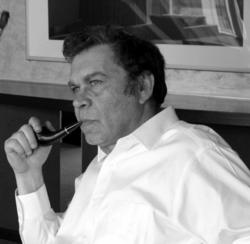 Eliyahu Moshe Goldratt (March 31, 1947 – June 11, 2011)
Discover more from Innovate ~ Educate ~ Collaborate
Subscribe to get the latest posts sent to your email.
 Innovate ~ Educate ~ Collaborate