
A Book Review.
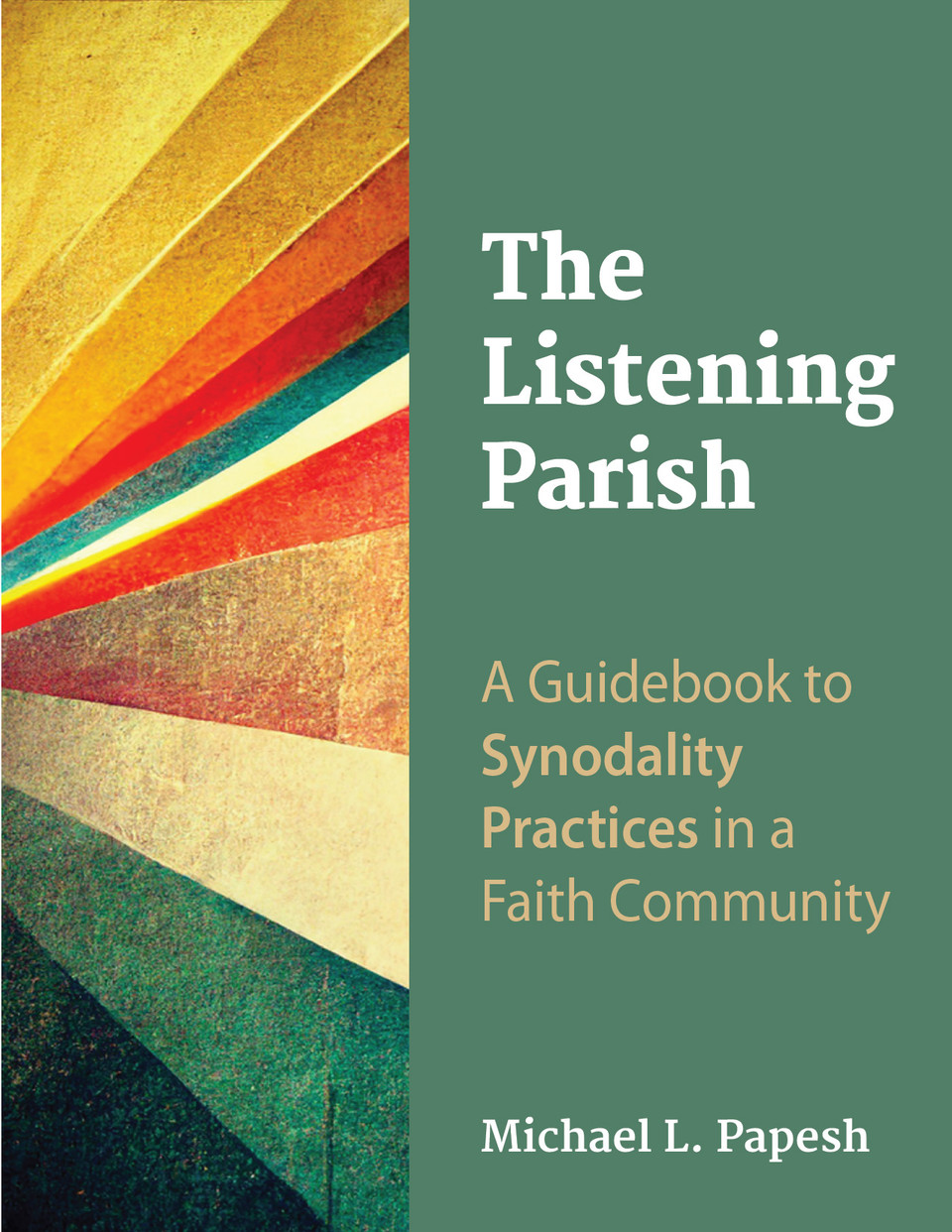
The Listening Parish: A Guidebook to Synodality Practices in a Faith Community by Michael L. Papesh
“On the Day of judgment, Christ’s sentence will not bear on your assistance at Mass, reception of Holy Communion, your fasts, and abstinence, nor will good intentions be of any avail; these are a means to an end, but it will call for your concrete acts of love.” ~ Lous J Putz CSC
Your concrete act of love is at the heart of all Catholic Social Teachings (CST), and it is what we are called to do as followers of Jesus. The Sermon on the Mount is one of the stories that provides insights into what to do and why we should do it.
The Cardijn method of See-Judge-Act is the process tool to use with the book The Listening Parish: A Guidebook to Synodality Practices in a Faith Community by Michael L. Papesh.
Ask yourself if your parish is listening.
“Synodality is a style; it is a walk together, and it is what the Lord expects from the Church of the third millennium.” ~ Pope Francis 11/29/2019
This book is practical, insightful, and an excellent guide for leading your parish to implement what will come from the final sessions of the Synod this October.
But why wait?
The guidebook will lead you through implementing Catholic Social Teachings at your local level. How can people get involved and dedicated to bringing about the Kingdom of Heaven here on Earth?
The book will provide much-needed synodality background and worksheet-based chapters to help you incorporate the approach into pastoring, leadership councils, meetings, planning, decision-making, staff roles, schools, just employment practices, building the parish assembly, and moving to the peripheries. An added plus is that The digital “eResource” edition available directly from The Pastoral Center is licensed for use within a parish or diocesan office, allowing you to quickly email or print one or more of these handouts for your leadership teams. You will have the tools at your fingertips over and over with new committees and groups to expand your parish and work for the Kingdom by implementing Catholic Social Teachings.
The guidebook is arranged in the following order by chapters, as you can see, providing a richness of information to help parishes plan their work and work their plan.:
- Introduction
- Using This Guidebook
- On Being Family
- Assumptions Exposed
- Considering Synodality
- What is the Call About?
- Reflection Questions
- What is Synodality?
- A Case Study
- A Dynamic Model of Church
- Co-Responsibility & Respect
- Beliefs Grounding Synodality
- What Synodality is Not
- Thought-Provoking Images
- The Synodal Path for the Parish
- Probing Practices Questions
- Parish Practices for the Journey
- Church Structure
- The Diocese
- Parish Civil Law Status
- Parish and Leadership Variation
- The Pastor
- The Parish and the Pastor
- What Pastoring Requires
- One Among Man
- Reflections for a Pastor
- Council Basics
- Parish Councils in Law
- The Council’sCouncils’ Mission
- Planning and the Pastoral Council
- Planning and the Finance Council
- Council Election & Eligibility
- Council Meetings
- Effective Council Meetings
- The Place of Confidentiality
- Meeting Agendas
- Meeting Mechanics
- Meeting Facilitation
- Who Chairs the Meeting?
- Discernment Decision-Making
- Discerning Together
- A Sample Discernment Process
- Further Reflections
- The Ministry Staff
- Staff Titles
- Decision-Making
- Communion in Co-Pastoring
- Commissions & Decision-Making
- Administrative Staff
- Parishes with Schools
- School As Parish Ministry
- The School Principal
- School Ministry Governance
- Just Employment Practices
- Synodality and Just Employment
- Covenant Ministry
- Ministry Planning & Review
- Covenant Hiring
- Just Compensation
- Just Termination
- Building a Parish Assembly
- Engaging the Parish Assembly
- Two Annual Reports
- A Sample Data Gathering
- Moving Toward the Peripheries
- Opening to the Peripheries
- Responding to the Peripheries
- A Large Group Listening Process
- A Sample Pastoral Planning Process
- Process Outline
- Step 1: Parish Sense of Self
- Sample Beliefs Statements
- Step 2: Parish Image
- Sample Organization Charts
- Step 3: Parish Direction
- Sample Goals & Objectives
- Steps 4-8. Parish Accomplishment
- Parish Synodality in Practice
- Living the Spirit of Synodality
- Some Limits
- Participating in God’s Family Life
The “See-Judge-Act” method involves observing, judging(discerning), and acting on social situations.
The three stages are:
- Observe: What is happening?
- Judge/discern: Why is it happening?
- Act: How do we respond?
Using the See-Judge-Act analysis method with The Listening Parish guidebook will help you discern in light of CST principles and act to promote justice and improve the situations of those served in your parish and the local community. Think of the Cardijn methods and the book as the perfect bookends for achieving synodality in your community.
When you plan your work and implement your plan, you incorporate KEY points of measurement, consider behavioral changes, create agreed-upon policies, and monitor them so that you can make the necessary adjustments.
A little bit about the author:
MICHAEL L. PAPESH was ordained in 1983 and is now retired from active ministry. He has served as a campus minister, parochial vicar, weekend assistant, principal, CRE, and pastor; in seminary spiritual formation at the undergraduate and graduate school levels; on numerous diocesan committees and boards related to priestly life and ministry; and in diocesan chancery ministry.
He has a B.A. in English from St. Meinrad College, master’s degrees from Indiana University and St. Meinrad School of Theology, and a Doctor of Ministry degree from the United Theological Seminary of the Twin Cities. He is also the author of Clerical Culture: Contradiction and Transformation from Liturgical Press and Good News Parish Leadership from Twenty-Third Publications, as well as articles on clerical culture and liturgical presiding. He has won two Catholic Press Association Awards. Papesh has also won four literary awards after publishing two memoirs.
Discover more from Innovate ~ Educate ~ Collaborate
Subscribe to get the latest posts sent to your email.
 Innovate ~ Educate ~ Collaborate
You must be logged in to post a comment.